Showing posts with label discussion. Show all posts

Wednesday, March 22, 2023

The Bookworm Tag


The Bookworm Tag


 The (Very Simple) Rules

-Answer the questions.

-Make up new ones.

-Tag people.


I was tagged by Cindy at Cindy’s Book Corner.


Here are her questions to me and the other bloggers she tagged:


Too many books! Ca. 2000

  1. How many books do you have on your physical shelves? (It can be best guesstimate!) 


I have about 250 books on my physical shelves.


When I was a little bookworm, I happily accumulated books and accumulated books…One day, a shelf collapsed. I decided to count how many books I’d stacked and double-stacked and triple-stacked on my shelves. Oh my.  I had 8,000 books! I live in a 1,200 sq. ft. house. That is 6.6 books/sq. ft. That’s too many. So I culled and culled. I made a rule. A book comes in, and a book goes out. Brutal. But it’s what I do. 


  1. What is your favorite book-about-books?


The latest book-about-book that I love is Great Short Books by Kenneth C. Davis.


  1. What is your favorite format to read in (paperback, hardback, e-reader...)?


Once I loved paperbacks. They are easy to take with me everywhere.


But I bought a small light Kindle last year. Now I can carry a whole library with me everywhere.


  1. What is your favorite genre to read?


I love (1) children’s picture books, (2) nonfiction that reads like fiction, (3) literary fiction, (4) poetry, (5) classics, and (6) books about happiness.


  1. How do you find new-to-you authors?


I watch what my blogging friends are reading.


  1. What is a series (or book) you would/have reread over and over again?


The book I've read and reread the most is probably A Wrinkle in Time.


  1. Do you have a book (or author) you are constantly recommending people to read? If so, what is it?


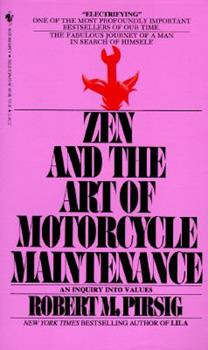
My favorite book to recommend to others is—sigh— Zen and the Art of Motorcycle Maintenance. People never read it. Some try, but they hate it and give up. Sigh.


  1. What is a genre you would never read?


I do not like scary books.


  1. Do you prefer long books or short books?


Short books. 


Grandpap ca. 1950, with snakeskins.
A reader as well as a Texas cowboy.

  1. Who inspired your love of reading? 


My grandfather—Grandpap—loved to read. Grandpap had to leave school in eighth grade, but he educated himself with all the books he read. He was my inspiration.


If you want to do it, consider yourself tagged! Here are my questions for you:


1. If you had to pick one book that has most influenced your life in a positive way (other than a religious book), what would it be?

2. What is the wisest book you have read?

3. Would you rather read a million books quickly or a few books slowly?

4. How many books do you read in a year?

5. Do you have a favorite poem?

6. What's your favorite classic? How were you introduced to it?

7. Was there a time in your life when you were not a reader? If so, what changed?

8. The average person in America reads less than one book a year. Do you have ideas about how we can reach the un-booked?

9. What book did you read that you thought you'd hate, but ended up loving?

10. What books led you to become a reader?


Consider yourself tagged. If you wish.


If you do the tag, come back and let me know, I would LOVE to visit your blog and see your answers.


Thursday, February 18, 2021

Can We Talk About...Diversity in Books?

Some of the books I read as a child in the 1950s and 1960s.

When I was a child, I looked for myself in stories. I read books set in New York City. What? People live in apartments? I asked myself as I read. Some stories were set out on a farm. That, too, was outside my experience. Most stories were of big, jolly families with five or six or seven children. Where were families like mine? I wondered. Where were stories with a divorced dad and a half-brother living far away in another state? Where were stories of small-town life? It wasn't until I discovered the Beverly Cleary books that I felt like I was able to read stories about people like me. 

And I am from what has come to be seen as a privileged white childhood. I can't imagine what it must have been like for black children or Hispanic children or Asian children. I can't imagine the difficulty of poor children trying to find connections in stories. Those stories did not exist when I was a child in the 1950s and 1960s.

When I became a librarian, I was told of the idea of books as mirrors and windows. This idea was first shared by an educator named Emily Style in 1988. Style says that books that reflect the student's own life are mirrors and books that show the larger world are windows. We need both, Style tells us. 

Dr. Rudine Sims Bishop has spent her career expounding upon the idea of mirrors and windows. Her central idea is this: all young readers need books with a wide range of characters, characters of all ethnicities and backgrounds, characters who have had a wide array of experiences. Bishop goes on to say that not only do black children need to see black children in their stories and Ojibwe children need to see Ojibwe children in their stories, but also black children need to see Ojibwe children and vice versa. In addition, white children need to see all of these, too.

I remember a story from when I was training to be a librarian. A group of us were sent into an all-black school in a very poor, inner-city Houston neighborhood. The library in this school had been closed for ten years. (That's right. No librarian. No library. For ten years. In Houston ISD, the money allocated to each school is completely subject to the whims of the principal.) We library students were asked to help the newly hired black librarian discard old books for the reopening of the library that was to happen at the beginning of the next school year. We began to create a huge pile of books that easily met the criteria for needing to be discarded (obsolete; worn out; sexist content; racist content). The librarian ordered us to stop, and she drew us all together to speak to us. "If you find a book that has a black face in it, that book will stay in this library," she commanded us. "I don't care what the words say. I don't care what condition the book is in. I don't care if the book is out-of-date. I want my children in this school to see some black faces in books."  That's how badly this new librarian wanted some mirrors for her students.

I remember the first time I read Newbery-award winning book, Roll of Thunder, Hear My Cry by Mildred D. Taylor. In the very first chapter of the story, we are introduced to a hardworking black mom and dad who have put together enough money to buy their own farm in the South in the 1930s. They have several children, including a little boy who is just starting school for the first time and who is extremely concerned with being clean and neat. The boy and his sister walk to their black school (it's miles to school from their home) and a driver on a school bus from the white school (note that these children have a bus to get to school) sees the group of children walking to the black school, and he purposefully hits a mud puddle and splashes the children with mud. The little boy is horrified. And when he gets to school and is able to get cleaned up a little, the boy is delighted to receive his very first textbooks. But then he opens the book to see all the accumulated grime and dirt of many years over the textbook's pages. Inside is a label put on by the state, noting the years of use and condition of each book. The early years show Excellent condition and White school. The middle years show Good condition and White school. The last years show Poor condition and Black school. At some point, as I was reading along, I realized that the characters in this story lived in a town thirty miles from where my dad grew up, and that this little boy in the story was born the same year as my dad, and that the family was, in its economic frugality and attention to high values, exactly like my dad's family. Except that the characters in the story were black and my dad was not. Windows for me. Big windows into a world that was so close but a world I'd never seen.

So, windows and mirrors for all children. And, maybe, just maybe, for adults, too.


Tuesday, February 2, 2021

Books Published When I Was Born

So, of course, I wasn't reading immediately after birth (though I began, my mother told me, when I was only two), but my mom was a reader, a big reader, and these were the books that were published around the time I was born, in the mid-1950's. 

Back then, my mom would only have had access to books through the once-a-month bookmobile from the public library or books that would have arrived from her membership in Book-of-the-Month Club or books she could have bought at the drugstore in the tiny town in Texas, population about 1000, where she lived.

How likely would it be that my mom read these books? What would she have thought of the books? Let me take a look.


Marjorie Morningstar by Herman Wouk, published 1955. Bestseller about a woman who wants to become an actress, and falls in love with a man who is embarking on an artistic career but has no interest in marrying and living a conventional 1950's life. 

How likely would it be that my mom read this book? Very likely. 

What would she have thought of the book? Enjoyed it.


Peyton Place by Grace Metalious, published 1956. Bestseller about "how three women are forced to come to terms with their identity, both as women and as sexual beings, in a small, conservative, gossipy New England town, with recurring themes of hypocrisy, social inequities and class privilege in a tale that includes incest, abortion, adultery, lust and murder." 

How likely would it be that my mom read this book? I'm almost positive my mom read this book.

What did she think of the book? She thought it was racy.


Seize the Day by Saul Bellow, published 1956. 'The story centers on a day in the life of Wilhelm Adler (a.k.a. Tommy Wilhelm), a failed actor in his forties. Wilhelm is unemployed, impecunious, separated from his wife (who refuses to agree to a divorce), and estranged from his children and his father. He is also stuck with the same immaturity and lack of insight which has brought him to failure. In Seize the Day Wilhelm experiences a day of reckoning as he is forced to examine his life and to finally accept the "burden of self."'

How likely would it be that my mom read this book? Possible.

What did she think of the book? Might have enjoyed it.


Giovanni's Room by James Baldwin, published in 1956. "The book focuses on the events in the life of an American man living in Paris and his feelings and frustrations with his relationships with other men in his life, particularly an Italian bartender named Giovanni whom he meets at a Parisian gay bar." 

How likely would it be that my mom read this book? Very unlikely that my mom had access to this book.


Dead Man's Folly by Agatha Christie, published in 1956. Detective novel. 

How likely would it be that my mom read this book? Very likely. 

What did she think of the book? Enjoyed it. She liked mysteries all her life.


Howl and Other Poems by Allan Ginsberg, published in 1956. 'In "Howl" Ginsberg denounced what he saw as the destructive forces of capitalism and conformity in the United States. San Francisco police and US Customs seized "Howl" in 1956, and it attracted widespread publicity in 1957 when it became the subject of an obscenity trial, as it described heterosexual and homosexual sex at a time when sodomy laws made homosexual acts a crime in every state. The poem reflected Ginsberg's own sexuality and his relationships with a number of men, including Peter Orlovsky, his lifelong partner.'

How likely would it be that my mom read this book? Very unlikely my mom would have had access to this book.


Diamonds are Forever by Ian Fleming, published in 1956. Spy novel.

How likely would it be that my mom read this book? Possible.

What might she have thought of the book? Enjoyed it. 


Imperial Woman by Pearl S. Buck, published in 1956. Imperial Woman is "the story of the last Empress in China, born into one of the lowly ranks of the Imperial dynasty. According to custom, she moved to the Forbidden City at the age of seventeen to become one of hundreds of concubines. But her singular beauty and powers of manipulation quickly moved her into the position of Second Consort."

How likely would it be that my mom read this book? I think my mom read all of the Pearl S. Buck books about China. She later recommended them to me.

What did she think of the book? Loved it.


The Last of the Wine by Mary Renault, published in 1956. Historical fiction "set in ancient Greece, the second of her works to feature male homosexuality as a major theme."

How likely would it be that my mom read this book? Likely.

What did she think of the book? She loved historical fiction.


The Stars My Destination by Alfred Bester, published in 1956. Science fiction.

How likely would it be that my mom read this book? Very unlikely. I don't think she ever read any science fiction.


My Family and Other Animals by Gerald Durrell, published in 1956. "Autobiographical work by British naturalist Gerald Durrell. It tells in an exaggerated and sometimes fictionalized way of the years that he lived as a child with his siblings and widowed mother on the Greek island of Corfu between 1935 and 1939."

How likely would it be that my mom read this book? Very unlikely.

What might she have thought of the book? She would have enjoyed the story.


Doctor Zhivago by Boris Pasternak, published in 1957. It's historical fiction, the story of "a physician and poet, and takes place between the Russian Revolution of 1905 and World War II."

How likely would it be that my mom read this book? Likely.

What did she think of the book? She loved historical fiction.


On the Beach by Nevil Shute, published in 1957. Post-apocalyptic novel. "The novel details the experiences of a mixed group of people in Melbourne as they await the arrival of deadly radiation spreading towards them from the Northern Hemisphere, following a nuclear war a year previously. As the radiation approaches, each person deals with impending death differently."

How likely would it be that my mom read this book? Possible.

What might she have thought of the book? I think she would have enjoyed it.


The Cat in the Hat by Dr. Seuss, published in 1957. Children's book.

How likely would it be that my mom read this book? Certain.

What did she think of the book? She read it over and over to me. It was my first book. We both loved it.


Thank you to Davida Chazan @ The Chocolate Lady’s Book Review Blog for today's prompt.


Top Ten Tuesday was created by The Broke and the Bookish in June of 2010 and was moved to That Artsy Reader Girl in January of 2018. It was born of a love of lists, a love of books, and a desire to bring bookish friends together. Each Tuesday That Artsy Reader Girl assigns a topic and then post her top ten list that fits that topic. You’re more than welcome to join her and create your own top ten (or 2, 5, 20, etc.) list as well. Feel free to put a unique spin on the topic to make it work for you! Please link back to That Artsy Reader Girl in your own post so that others know where to find more information.

Thursday, January 14, 2021

Rereading

I was not always a rereader. 

I like to read books fast. I like to read books with stories in which I don't know what was coming. I like to read lots of books. 

Rereading is the antithesis of these things. Rereading is slow. Rereading is knowing what is next. Rereading is reading fewer books.

Still, I have come to see the pleasures of rereading. 

I am intrigued with a study published in the Journal of Consumer Research in 2012, "The Temporal and Focal Dynamics of Volitional Re-Consumption: A Phenomenological Investigation of Repeated Hedonic Experiences," by Cristel Antonia Russell and Sidney J. Levy. Russell and Levy investigated why people visit the same places over and over, why they watch movies again and again, and, what I am most interested in, why people read and reread the same books repeatedly. "By doing it again, people get more out of it,’ say authors Cristel Antonia Russell of American University and Sidney J. Levy of University of Arizona and Northwestern University. ‘"Even though people are already familiar with the stories or the places, re-consuming brings new or renewed appreciation of both the object of consumption and their self," Russell and Levy write. "The re-experience allows them not only to refresh their memory of the past experience but the recollection is accompanied by the discovery of new details. Therefore, the experience is different, even though it is repeated," the authors explain. "Given the immense benefits for growth and self-reflexivity, re-consuming actually appears to offer many mental health benefits," the authors tell us.

What-to-read-next is one of my favorite daily questions. We are all drawn, I think, to the shiny new books on the shelf. But what about the delights of the worn and closely-read books of the past? I hope to explore those in the time I have remaining here on this planet.

That's what it comes down to. We just have so much time remaining. I have a life expectancy of 81.1 years. I am just a little past 64. That gives me 16.9 years left to read. During the pandemic, I've found myself reading a 300-page adult book each day, though I doubt I will be able to continue that pace once life resumes (assuming it will do so). Let's say I can read a 300-page adult book every third day, a pace that sounds a little more realistic. That's roughly 120 books a year, with a grand total of 2052 books during these last years of my life. I like that number, even if I temper it somewhat by remembering that some of these books I will be reading or rereading will be 600-page or more books, cutting into my numbers. Maybe 100 a year is a good number. I could choose a good number of new books (say, 20-30) as well as new-to-me classics (maybe 20-30) as well as rereading some books I've enjoyed in the past (leaving me with around 40 which sounds ideal). 

I like that plan.


What books would I like to reread? Here's a list, with an asterisk by the ones I plan to reread soon.
All Things Bright and Beautiful*
All Things Wise and Wonderful*
David Copperfield*
Dubliners
A Fine Balance
The Glass Bead Game
The Gold Bug Variations
The Hobbit
The Hunchback of Notre Dame
Main Street*
Middlemarch
The Phantom Tollbooth
The Stars My Destination*
The Three Musketeers*
A Tree Grows in Brooklyn*


Are you a rereader? Or do you like to stick to reading books you have never read before? Are there books you would like to reread one day? What are they? 

I'd love to hear your thoughts in the comments.


Cristel Antonia Russell and Sidney J. Levy. "The Temporal and Focal Dynamics of Volitional Re-Consumption: A Phenomenological Investigation of Repeated Hedonic Experiences" 
Journal of Consumer Research: August 2012 (published online October 28, 2011).

https://press.uchicago.edu/pressReleases/2012/February/1202_JCR_Reigniting.html